
If you’ve shipped multiple side projects but still struggle to land consistent freelance work, you’re not alone.
In the AI era, tools like Cursor, Claude, and Lovable have fundamentally changed how developers build. What used to take weeks now takes days. In some cases, entire apps are shipped over a weekend.
This shift—often called vibecoding—means one thing:
Building is no longer the bottleneck. Getting paid is.
The real challenge now is turning your existing work into something that attracts clients. This guide will show you how to go from side project to paying clients by positioning your work as proof—not just code.
The Opportunity: Why This Works Now
The supply of builders has exploded
With AI-assisted development, more developers are shipping faster than ever. The barrier to execution has dropped significantly.
But clients still hire based on proof
Despite faster building cycles, clients don’t hire based on how quickly you can code. They hire based on:
- What you’ve already built
- Whether it solves real problems
- How clearly you communicate value
AI increased output—but decreased differentiation
When everyone can build quickly, your advantage shifts from:
- “Can you build this?”
to
- “Have you already solved something like this?”
That’s where your projects become your biggest asset.
The New Model: Projects → Proof → Clients
Why just “building projects” doesn’t work anymore
Most developers treat projects like:
- GitHub repos
- Feature experiments
- Learning exercises
Clients don’t see them that way.
They’re looking for:
- Solutions
- Outcomes
- Relevance to their problem
The difference between a project and a proof asset
A project says:
“I built this.”
A proof asset says:
“I solved this specific problem—and here’s how.”
That transformation is everything.
How clients actually evaluate developers today
Clients scan for:
- Familiar problems (“I need something like this”)
- Clear outcomes
- Clean presentation
Step-by-Step Framework: Turning Side Projects Into Client Flow
Step 1 — Identify Monetizable Projects
Not all projects attract clients.
The best ones:
- Solve a business problem
- Automate something valuable
- Improve a workflow
- Generate or save money
Examples of strong positioning:
- “Automated lead tracking dashboard”
- “Internal admin panel for managing orders”
- “AI-assisted content workflow tool”
Weak positioning:
- “Task manager app clone”
- “Twitter UI rebuild”
👉 The goal: Make your project feel like something a company would pay for.
Step 2 — Convert Projects Into Proof Assets
Every project should become a case study.
Structure it like this:
- Problem – What was broken or inefficient?
- Solution – What did you build?
- Stack – Keep it brief and relevant
- Outcome – What changed?
This is where most developers lose opportunities—they stop at “I built this.”
Step 3 — Use AI as a Force Multiplier (Not the Product)
In the AI era, your edge isn’t just building—it’s how you present and refine your work.
Use tools like:
- Claude → to refine explanations
- Cursor → to clean up UX and flows
- Lovable → to quickly iterate UI
But remember:
Clients don’t pay for AI usage. They pay for outcomes.
AI helps you:
- Ship faster
- Polish better
- Explain clearer
Step 4 — Package Your Profile Like a Sales Page
Your profile is not a resume. It’s a conversion asset.
It should answer:
- What problems do you solve?
- What proof do you have?
- Why should someone trust you?
Structure:
- Headline: Outcome-driven (“I build dashboards that automate reporting”)
- Projects: Proof blocks (not just links)
- Narrative: Short, clear positioning
Build a high-converting developer profile
Step 5 — Activate Two Client Channels
1. Applications (Outbound)
- Apply to relevant projects
- Reference your proof assets directly
2. Inbound (Discovery)
- Clients browse profiles
- Your projects act as magnets
The best freelancers do both.
Real Examples: How Projects Turn Into Paid Work
Example 1 — Dashboard → Paid Client
Project: Analytics dashboard for tracking user behavior
Positioning: “Helps startups understand churn and retention”
Why it worked:
- Clear business value
- Familiar problem
- Easy to visualize usage
Result:
→ Attracted a startup looking for similar functionality
→ Converted into a paid build
Example 2 — Automation Tool → Retainer Work
Project: Script that automates report generation
Positioning: “Saves 10+ hours/week on manual reporting”
Why it worked:
- Direct ROI
- Time savings = money
Result:
→ Client requested customization
→ Turned into ongoing work
The Modern Vibecoding Stack (What Clients Actually See)
Let’s break this into what you use vs what you show.
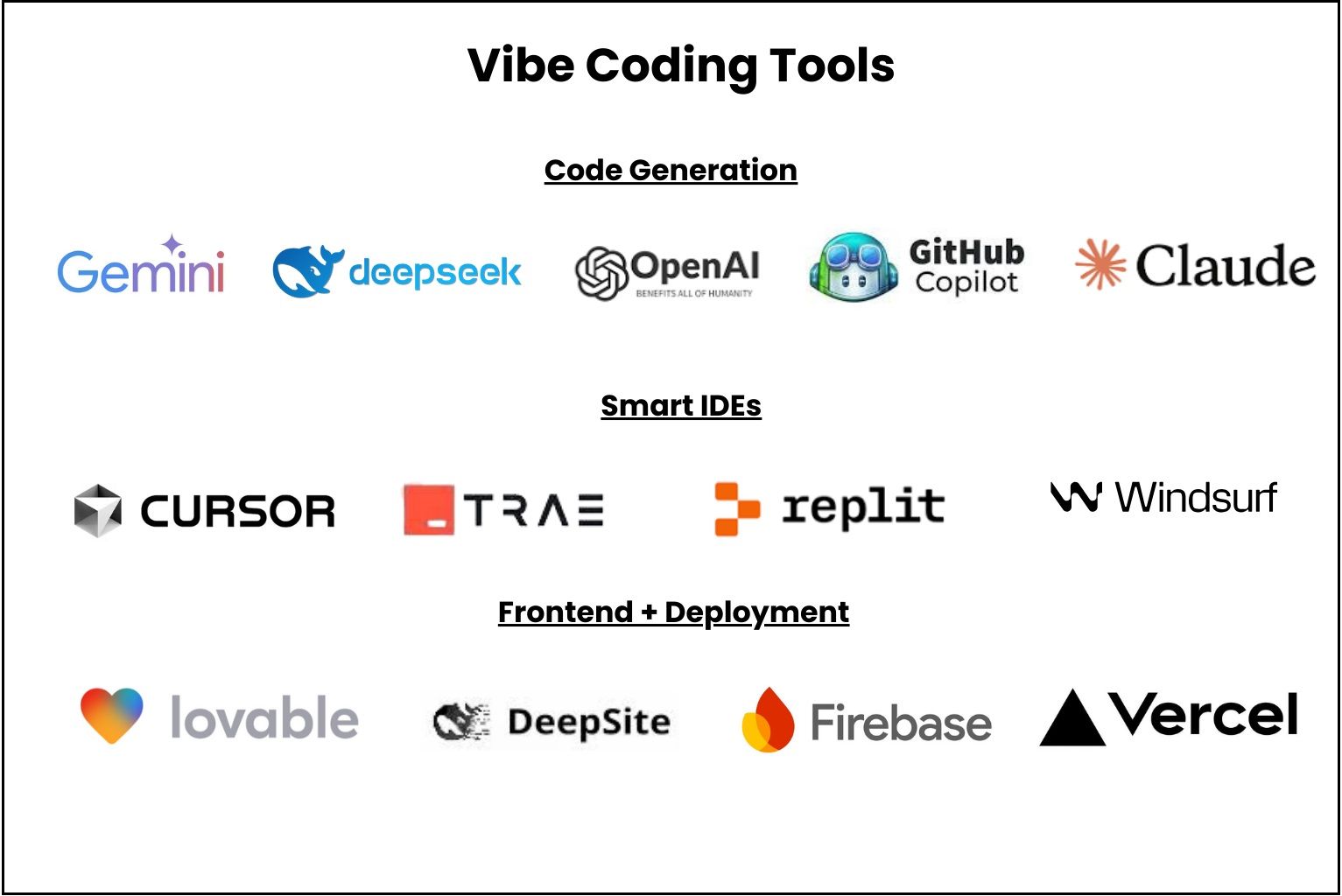
1. Build Layer (AI-Assisted Execution)
This is where vibecoding happens.
- Cursor → write, refactor, and extend code fast
- Claude → debug logic, generate flows, explain decisions
- Lovable → spin up full UI + backend quickly
Reality:
You can now go from idea → working product in a weekend.
What clients infer:
“This developer can execute quickly.”
But speed alone doesn’t convert.
2. Proof Layer (This Is What Actually Gets You Paid)
This is where most developers fail.
Instead of showing:
- “Here’s my repo”
You need to show:
- “Here’s what this does for a business”
Turn your vibecoded app into:
- A clear use-case demo
- A problem → solution walkthrough
- A before/after transformation
3. Presentation Layer (Where Clients Decide)
Clients don’t open your code first.
They:
- Scan your profile
- Click on projects
- Decide in seconds
This means:
- Loom demo → shows real usage
- Clean UI screenshots → builds trust
- Short explanation → removes confusion
Where This Breaks (Common Mistakes)
Mistake 1 — Treating projects like code dumps
Clients won’t dig through your repo.
Mistake 2 — Over-relying on AI without clarity
If your project feels generic, it won’t convert.
Mistake 3 — No clear positioning
If everything you build is random, nothing stands out.
Mistake 4 — Only applying, no inbound
You’re missing half the opportunity.
Monetization Paths
Path 1 — Apply to Posted Projects
- Fastest way to get initial income
- Use proof to stand out
Path 2 — Inbound Clients
- Scales better over time
- Projects act as discovery hooks
Path 3 — Retainers
- Clients come back for:
FAQ: Turning Side Projects Into Clients
How do I turn side projects into freelance clients?
By converting them into clear proof assets that show business value, not just functionality.
Do I need to be an expert to get clients?
No. You need relevant proof, not years of experience.
What kind of projects attract high-paying clients?
Projects that:
- Save time
- Make money
- Improve workflows
How many projects do I need?
You only need 2–4 strong proof assets—not 20 random builds.
Why is my portfolio not converting?
Because it likely shows:
- What you built
instead of
- What problems you solved
Turn Your Work Into Opportunities
In the AI era, where everyone can build faster, the developers who win are the ones who:
- Package their work as proof
- Make it easy to understand
- Put it where clients are looking
If you already:
- Use Cursor or Claude
- Ship apps quickly
- Have 2–3 solid builds
Then you’re sitting on untapped income.
Next step:
- Turn those projects into proof
- Publish them on your profile
- Let clients find you based on what you’ve already built
Create your developer profile and showcase your projects